


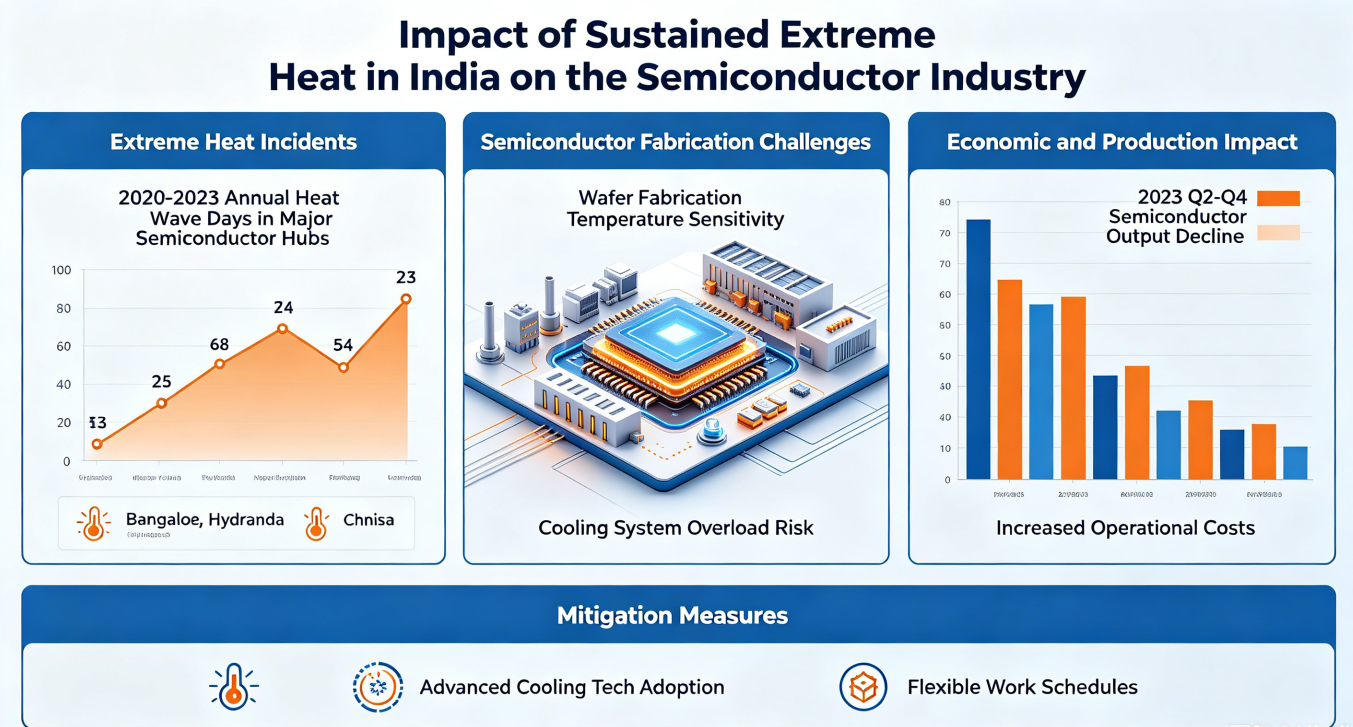
Persistent extreme heat (temperatures hitting 45–50°C across many regions) has dealt a systemic blow to India’s semiconductor ambitions, triggering issues including unstable temperature control in cleanrooms, erratic power and water supply, surging operating costs, foreign investor retreats and prolonged project delays. These challenges will not be resolved in the short term.
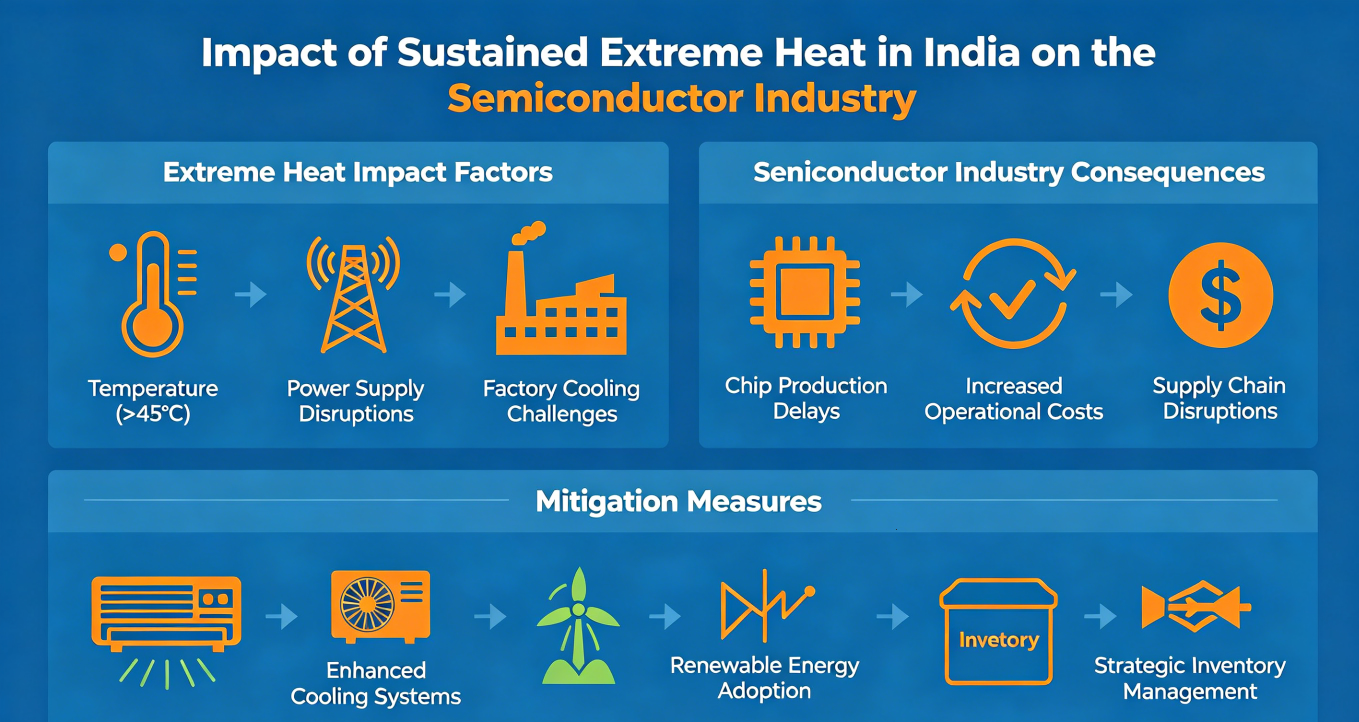
1. Production Environment: Compromised Precision Manufacturing Standards
- Unstable temperature and humidity: Wafer fabrication requires a constant environment of 22°C (±0.1°C) and 45% relative humidity (±5%). Even with air-conditioners running at full capacity under external temperatures of 50°C, stable conditions cannot be maintained, bringing a high risk of full wafer batch rejection.
- Fluctuating cleanroom pressure: Extreme heat disrupts differential pressure inside cleanrooms, leading to excessive airborne particles and lower production yield.
- Rising equipment failure rates: Lithography and etching machines are highly temperature-sensitive. Extreme heat has pushed equipment failure rates up by around 60%, resulting in frequent unplanned downtime.
2. Power Supply: Grid Instability Threatens Continuous Production
- Overloaded power grid: India’s peak electricity demand reached 270.73 GW in May 2026, overwhelming the national power grid.
- Frequent blackouts: Industrial hubs such as Chennai experience average power cuts of 40 to 60 minutes per day. Large-scale outages lasting over 8 hours have occurred along the Delhi-Mumbai industrial corridor.
- Voltage fluctuations: Voltage deviations often exceed ±10%, while semiconductor production only tolerates a maximum fluctuation of ±5%. Even microsecond-level voltage transients can render entire wafer batches defective.
- High backup power costs: Factories rely heavily on diesel generators for power backup, eroding nearly 30% of quarterly profits.
3. Water Shortages: A Water-Intensive Industry Faces Severe Scarcity
- Massive demand for ultrapure water: A single 12-inch wafer fab consumes millions of liters of ultrapure water every day.
- Worsening water scarcity: High temperatures accelerate surface water evaporation and deplete groundwater reserves. Cities including Bengaluru are grappling with domestic water shortages, leading to restricted water allocation for industrial use.
- Insufficient purification capacity: India lacks advanced ultrapure water treatment technologies, resulting in dual shortages of production capacity and water quality.
4. Operational Costs: Sharp Cost Hikes Diminish Investment Returns
- Soaring cooling expenses: In extreme heat, electricity costs for cooling are 3 to 4 times higher than those in temperate regions, accounting for over 40% of total operating costs.
- Yield losses: Environmental fluctuations cut production yield by 5% to 15%, with losses per defective batch reaching millions of US dollars.
- Escalated overall costs: Intel assessed that operating costs for its proposed packaging plant in India would be 40% higher than in Malaysia, prompting the company to put the project on hold.
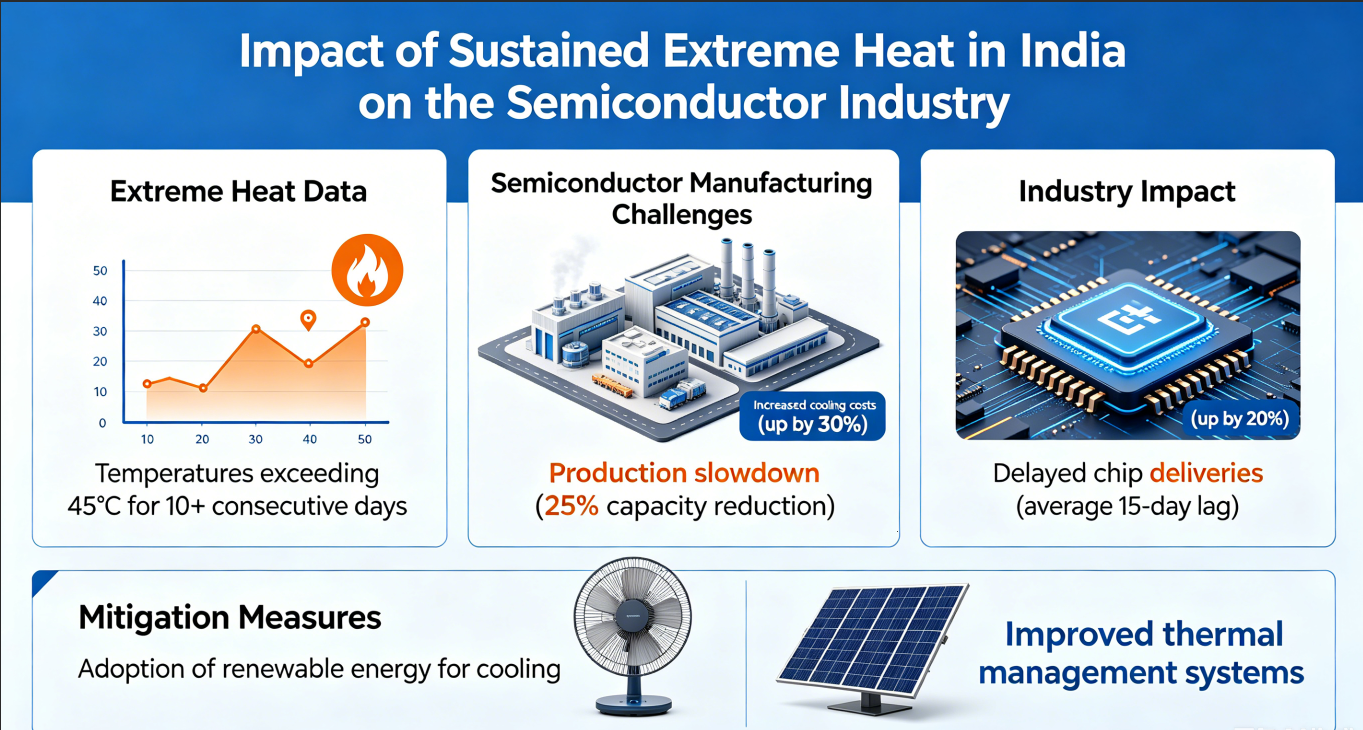
5. Foreign Investment: Multinational Firms Withdraw or Suspend Projects
- Foxconn-Vedanta Project: The $19.5 billion wafer and display manufacturing initiative launched in 2023 was terminated, with extreme heat and unreliable utilities as key contributing factors.
- Intel-Tower Partnership: A $3 billion semiconductor packaging plant plan was cancelled due to mismatched cost and risk expectations.
- TSMC: The company declined India’s invitation to build local fabs in 2025, citing substantial risks related to infrastructure and operating environments.
- Samsung: Frequent power outages forced repeated production halts at its Chennai electronics facilities, leading the company to divert orders to Vietnam.
- Micron: While the firm proceeded with its packaging and testing investment, it postponed expansion plans to wait for infrastructure improvements.
6. Industrial Progress: Major Setbacks for India’s Semiconductor Initiative
- Missed development targets: India originally planned to launch four chip fabs by 2026 and achieve 70%–75% domestic chip self-sufficiency by 2030. The overall progress has fallen far behind schedule.
- Tata-ASML Project: The $11 billion 12-inch wafer fab has been delayed for trial production until late 2026, and the official launch timeline remains uncertain.
- Constraints on design, packaging and testing: Computing power is limited at semiconductor design centers in Bengaluru. Packaging and testing facilities also face challenges in yield stability and on-time delivery.
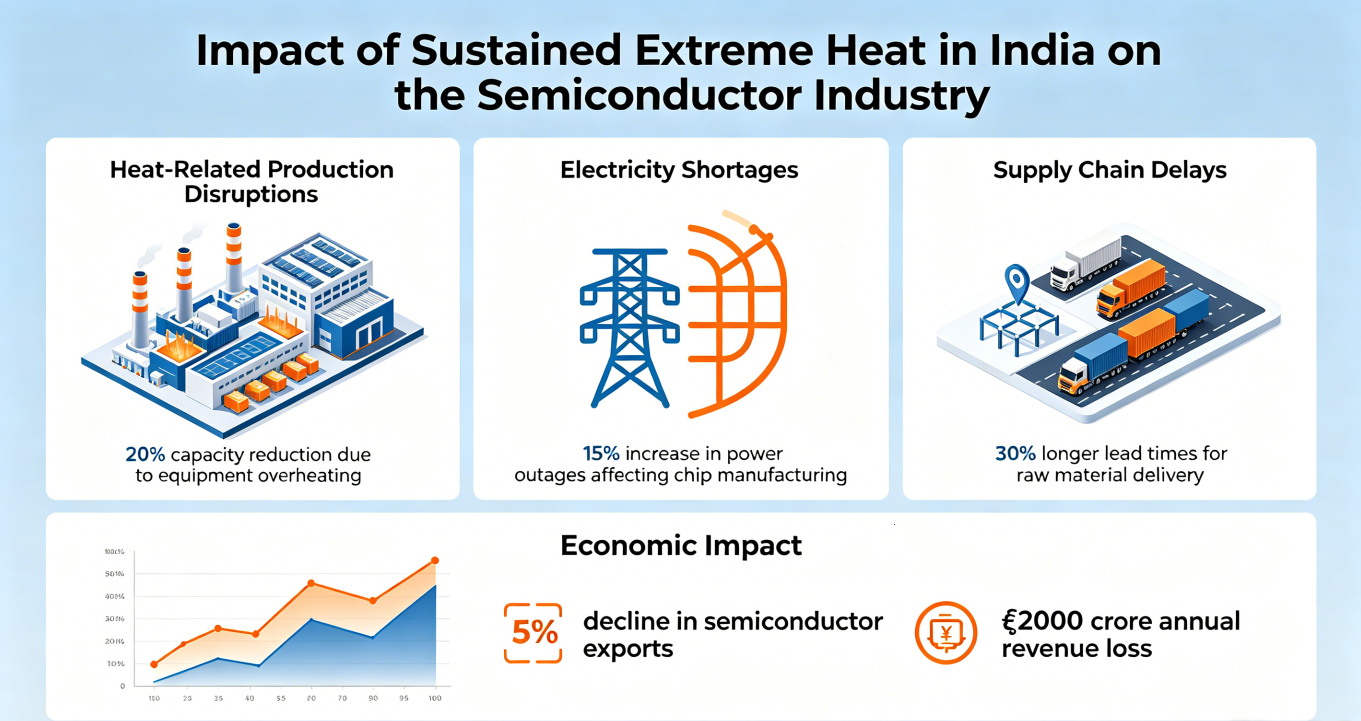
7. Long-term Impacts: Hindered High-end Manufacturing Transformation & Restructured Global Supply Chains
- Shifting global production capacity: Orders are increasingly transferred to regions with stable power, water supply and controllable costs, including mainland China and Vietnam, as well as Malaysia.
- Downgraded industrial positioning: India is likely to retreat from its goal of becoming a global high-end manufacturing hub and focus mainly on low-end packaging, testing and assembly businesses. Its ambition for advanced chip manufacturing will remain unfulfillable in the near term.
- Advantages for China: Supported by robust utilities and complete industrial chains, China will further strengthen its position as a key hub for mature-node chip production and advanced packaging and testing.
- Conclusion
Extreme heat has exposed fundamental infrastructure flaws in India’s semiconductor sector, namely inadequate power and water supply and poor environmental control capabilities. Combined with rising costs, retreating foreign investment and delayed projects, these issues have derailed India’s pursuit of becoming a global chip powerhouse. The country’s semiconductor industry may stagnate or even shrink over the next one to two years, while global chip supply chains will continue to concentrate in China and Southeast Asia.


-

How to distinguish between P-channel and N-chan...
-

Gate capacitance, on-resistance and other param...
-

What Is the Function of MOSFET in Antenna Circu...
-

How to determine whether a MOSFET is good or bad?
-

What Is a Switched Mode Power Supply?
-

MOSFET 101: The Ultimate Beginner’s Guide...
-

Understanding Cascode Amplifier MOSFETs: The Ul...
-

Do you know what an N-channel MOSFET is?
-

Back-to-Back NMOS: Principle, Structure and Wor...
-

The three pins of a MOSFET, how can I tell them...
-
What are the causes of heat in the MOSFET of an...
-

Understanding MOSFET Switching Speed for Optima...
-

Determining MOSFET Threshold Voltage: Expert Te...
-

CMS32L051SS24 MCU Cmsemicon® Package SSOP24 Bat...
-

Field Effect Transistor (FET / MOSFET) – Detail...
-

What is PMOSFET, do you know?


