


For BLDC fan, industrial motor control and synchronous buck power boards, switching frequency keeps rising to lower noise, shrink PCB size and boost efficiency. Many hardware engineers struggle with overheating, EMI noise and short service life after selecting unsuitable dual N+P MOSFETs.
Today we break down core high-frequency MOS evaluation indicators, and compare our 3 mainstream SOP-8 dual MOS models (WSP4063 / WSP4067 / WSP4067C) specially for Indian BLDC fan mass-production projects.
1. Key Electrical Parameters That Determine High-Frequency Performance
When running at PWM frequency above 20kHz, static on-resistance \(R_{DS(ON)}\) is no longer the only standard. Dynamic switching parameters dominate heat generation:
- Total Gate Charge (Qg): Smaller Qg means less charge/discharge loss on driving IC, lower driver temperature during long-hour high-frequency operation.
- Miller Charge (Qgd) & Reverse Transfer Capacitance (Crss): Low Crss suppresses Miller platform oscillation, reduces EMI interference and voltage spike from motor back EMF.
- Switching Time (Tr / Tf): Faster rise & fall time cuts switching loss;
- Avalanche Energy (EAS): Critical for India’s unstable power grid, absorbs instantaneous voltage surges from motor startup/shutdown.
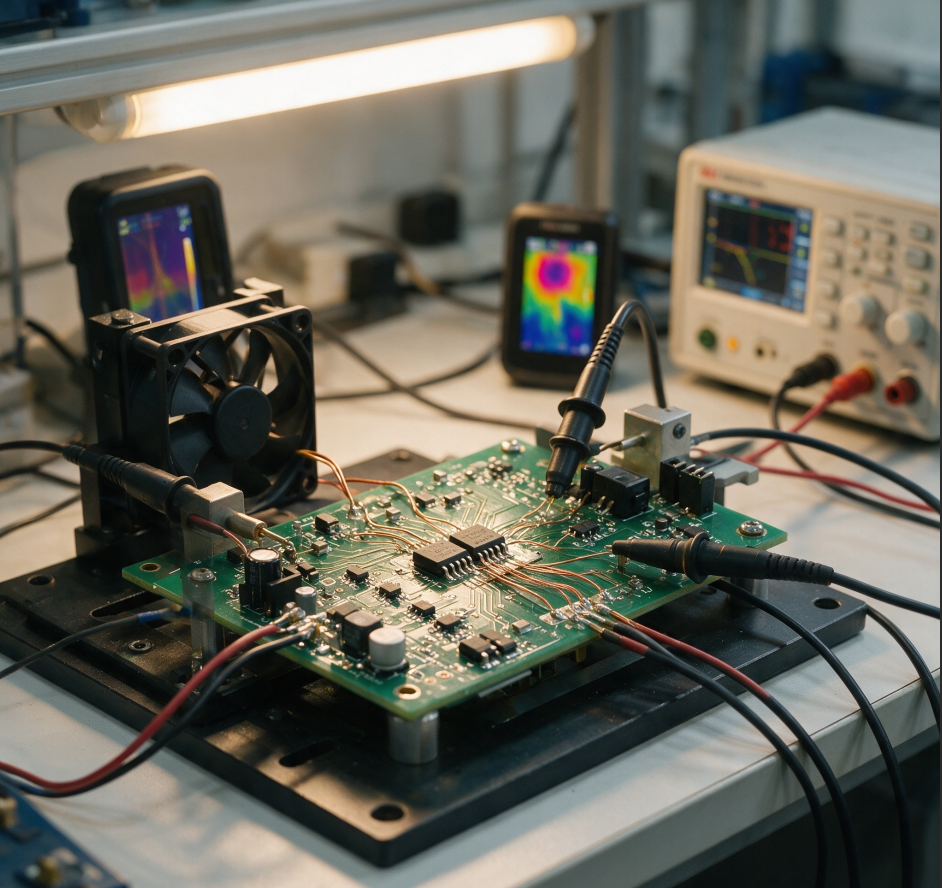
We target mass-production 40W BLDC fans, drop-in replacement for NS4614B/AO4614B, clear positioning for different frequency demands:
Model 1: WSP4067 – Top Pick for High Frequency ≥30kHz
- Core highlights: Ultra-low N-channel \(R_{DS(ON)}=16mΩ\), maximum continuous drain current 7.5A, balanced gate charge & capacitance
- High-frequency advantage: Minimum total switching loss (conduction loss + switching loss). Greatly lower fan surface temperature under full-speed high-frequency operation, effectively reduce motor running noise.
- Best fit: High-power BLDC fans with high PWM speed regulation, equipment requiring ultra-low operating temperature.
Model 2: WSP4063 – Best Balance of High Frequency & Harsh Grid Reliability
- Core highlights: Ultra-small Qg=3.9nC (@VGS=4.5V), industry-leading EAS avalanche energy 51mJ
- High-frequency advantage: The lowest gate driving loss among the three models. Even after continuous high-frequency aging test, the driving circuit will not overheat. Strong anti-surge capability adapts to India’s 4KV surge IRE standard.
- Best fit: Household industrial fans running 24/7, projects with strict reliability & long-life requirements.
Model 3: WSP4067C – Only for Low-Frequency Pin-to-Pin Replacement
- Core highlights: \(R_{DS(ON)}\) perfectly matches original NS4614B/AO4614B, zero PCB/firmware modification needed
- High-frequency weakness: Higher on-resistance will produce obvious cumulative heat under high-frequency full load, increasing long-term failure risk.
- Best fit: Low-frequency fan projects below 20kHz, only used for simple material substitution without frequency upgrade demand.
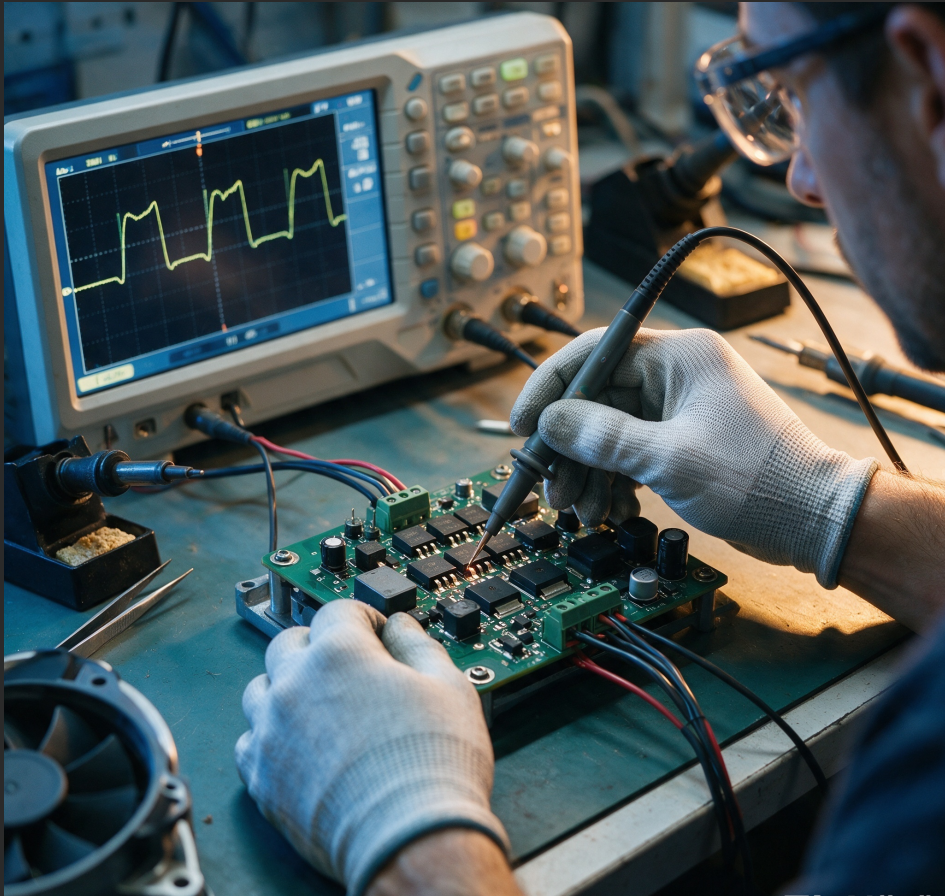
3. Quick Selection Guide for Engineers
- If your fan PWM frequency ≥30kHz & pursue low temperature & low noise → WSP4067
- If you need high frequency + strong anti-surge performance for Indian unstable grid → WSP4063
- If you just need direct replacement of NS4614B without frequency optimization → WSP4067C
4. Closing
High-frequency motor drive design cannot only focus on static resistance. Matching gate charge, capacitance and avalanche resistance according to your actual switching frequency is the key to reducing after-sales failure rate.
We provide free engineering samples for all three models. Our technical team can also offer complete parameter comparison tables to help your R&D team finish bench & aging verification faster.


-

Analysis of the reasons for the ineffectiveness...
-

How to Read & Describe MOSFET Specificatio...
-

Why are MOSFETs voltage controlled?
-

What Are the Functions of MOSFETs in Lithium‑io...
-

How to determine the high-power MOSFET is burne...
-

MOSFET Overdrive Voltage: Complete Analysis and...
-

What can I do to fix my MOSFET that is heating ...
-

How Much Current Is Required to Drive a MOSFET?
-

Small Signal Model MOSFET Analysis and Implemen...
-

Advantages of MOSFETs in Motor Drive Applications
-

MOSFET overcurrent protection circuit to avoid ...
-

PCM3360Q High-performance electronic components...
-

Power MOSFET Avalanche Guidelines: Ensuring Rel...
-

About MOSFET driver
-

Understanding CMOS Switch Technology: From Basi...
-

Mastering MOSFET as a Switch: Complete Implemen...


